
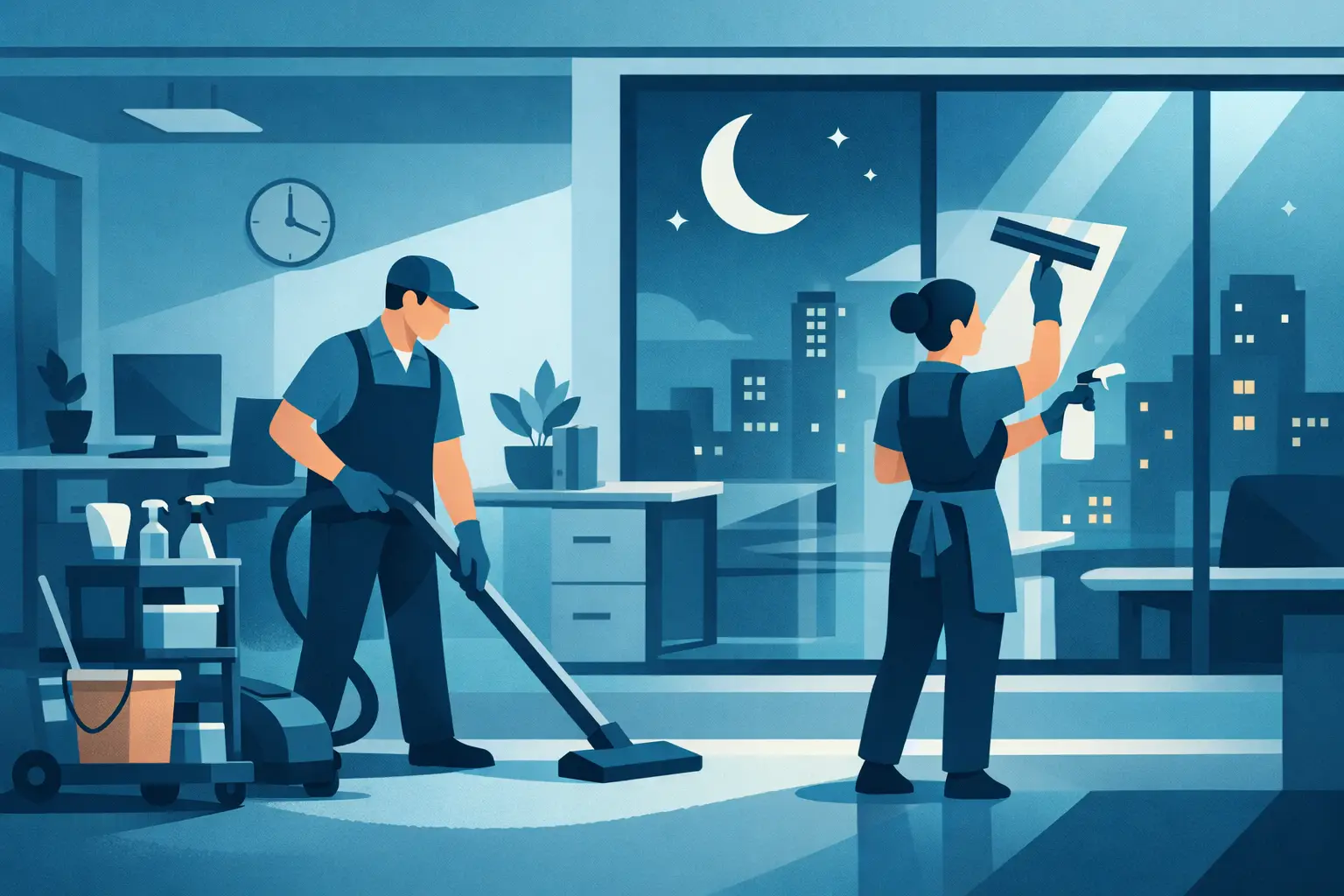
A lobby with streaked glass at 8:00 a.m., overflowing trash in a shared breakroom, and restroom supplies running low before the day begins all send the same message - facility care is happening too late, too inconsistently, or at the wrong time. That is exactly why businesses need after hours cleaning. For many commercial spaces, cleaning after employees, customers, and vendors have left is not just more convenient. It is the most practical way to protect presentation, reduce disruption, and keep standards consistent.
For business owners and facility leaders, the issue is rarely whether cleaning matters. The real question is when it can happen without getting in the way of operations. In offices, medical-adjacent facilities, retail spaces, multi-tenant buildings, and industrial support environments, daytime cleaning often creates avoidable friction. Vacuums compete with phone calls, floor care blocks foot traffic, and restroom service happens when occupancy is at its highest. After hours service solves a timing problem that directly affects how the building performs during business hours.
Why businesses need after hours cleaning for daily operations
A clean facility supports productivity, but the timing of that work matters as much as the work itself. When janitorial service takes place after hours, cleaning teams can move through the space more efficiently. They are not working around meetings, customer traffic, or active workstations. That means fewer interruptions and more thorough attention to the details that are easy to miss during a rushed daytime visit.
This matters in practical ways. Floors can be cleaned properly because there is time for mopping, machine scrubbing, or spot treatment without creating slip risks in high-traffic areas. Restrooms can be fully serviced when occupancy is low. Trash can be removed without carts moving through crowded hallways. Even basic dusting and surface disinfection become more consistent when technicians are not trying to stay invisible around an active workforce.
For operations leaders, that efficiency often translates into stronger service value. Crews can complete more work in less time when access is open and the building is quiet. The result is not just a cleaner space. It is a cleaner space achieved with less disruption to the people using it.
Cleaner spaces without disrupting employees or customers
Many businesses underestimate how much visible cleaning activity affects the day. In customer-facing environments, it can interfere with the experience you are trying to create. In office settings, it can break concentration, delay movement through shared areas, and create frustration when key spaces are temporarily blocked off.
After hours cleaning protects the workday. Employees arrive to a clean, stocked, orderly environment instead of watching that reset happen around them. Clients and visitors see polished common areas, clean entrances, and maintained restrooms at the moments that matter most. That first impression is shaped before the first conversation even starts.
There is also a professionalism factor that should not be ignored. Well-maintained facilities communicate that a business is organized, attentive, and reliable. Dirty floors, fingerprints on glass, or cluttered common spaces may seem minor in isolation, but together they affect perception. For property managers and tenant-facing operators, those details can influence satisfaction and confidence more than expected.
Why after hours cleaning supports better health and safety
Cleanliness is tied to appearance, but it is also tied to risk management. Shared surfaces, restrooms, kitchens, entryways, and high-touch zones all require consistent attention. After hours cleaning allows those tasks to be completed more comprehensively because there is better access to the full space.
That is especially important in facilities with rotating occupancy, steady foot traffic, or shared amenities. When cleaning is pushed into the middle of the day, some areas may get partial attention simply because the space is in use. Desks are occupied. Conference rooms are booked. Breakrooms are full. After hours service reduces those barriers and makes it easier to perform a more complete cleaning routine.
Safety also improves when heavier cleaning tasks happen off the clock. Wet floors, equipment cords, trash removal routes, and floor maintenance all carry some level of operational risk when people are moving through the building. Performing those tasks after hours lowers the chance of accidents and limits liability exposure.
For many facilities, the value is not dramatic. It is steady. Fewer interruptions, fewer hazards, cleaner surfaces, and a more controlled environment day after day. That consistency is what supports better outcomes over time.
Why businesses need after hours cleaning in high-traffic facilities
Not every building needs the same schedule. A small office with limited foot traffic may only need a few evening visits each week, while a large commercial property may require nightly janitorial support and periodic specialty cleaning. The reason after hours service works so well is that it can be matched to how the facility actually operates.
High-traffic environments usually see the greatest benefit. Entrances collect soil and moisture throughout the day. Restrooms need a full reset. Shared work areas show wear quickly. In these settings, cleaning during business hours often feels reactive. Cleaning after hours allows the team to restore the space fully so it is ready before the next shift or business day begins.
There are trade-offs, of course. Some facilities still need a daytime porter or touchpoint service for restocking, spill response, or mid-day restroom checks. After hours cleaning is not always a complete replacement for daytime support. In many cases, the best approach is a combination of both: visible daytime maintenance for immediate needs and a structured after hours program for deeper routine cleaning.
That is where customization matters. A one-size-fits-all schedule can leave gaps or create unnecessary service. A better plan is built around occupancy, traffic patterns, security protocols, and the expectations tied to the space.
Better results depend on access, consistency, and planning
Cleaning quality is often judged by what people see, but the real driver is process. After hours cleaning gives service teams the conditions they need to follow that process consistently. They can access more areas, use appropriate equipment, and complete tasks in a logical sequence instead of skipping around occupied spaces.
This is one reason many businesses change vendors after dealing with inconsistent daytime service. The issue is not always effort. Sometimes the schedule itself is working against quality. If a crew only has limited access to the building or has to constantly pause around staff and guests, consistency is harder to maintain.
A reliable after hours plan also supports accountability. Expectations can be clearly defined by area, frequency, and scope. Lockup procedures, alarm coordination, supply management, and special requests can all be built into the service routine. For facility managers, that structure creates fewer surprises and a better sense of control.
For businesses across Chicagoland, especially those with varying hours or multi-use spaces, dependability matters as much as cleaning itself. Americlean Professional Services focuses on tailored schedules and responsive support because the best cleaning program is the one that fits the building instead of forcing the building to adapt to the vendor.
The business case is stronger than it first appears
Some decision-makers view after hours cleaning as a convenience upgrade. In reality, it often protects time, presentation, and service quality in ways that justify the investment. Employees are not interrupted. Customers encounter a polished environment. Cleaning crews work more efficiently. Facility leaders spend less time addressing complaints or filling operational gaps.
There is also a long-term maintenance benefit. Floors, fixtures, restrooms, and common areas tend to hold up better when routine care is completed consistently and correctly. Deferred cleaning has a way of becoming a bigger expense later, whether through premature wear, emergency cleanup, or avoidable dissatisfaction from tenants, staff, or visitors.
That does not mean every business needs the same level of after hours support. The right frequency depends on the space, the industry, and the standard you need to maintain. What matters is recognizing that cleaning should support operations, not interfere with them. When service is scheduled at the right time, the whole facility runs better.
A clean building should feel ready before the first employee arrives and before the first client walks through the door. When that happens consistently, the space works the way it is supposed to - quietly, professionally, and without getting in the way of business.