If you are evaluating vendors for your building, you have probably asked some version of this question: what is janitorial cleaning services, and how is it different from general cleaning? That question matters because janitorial work is not just about making a space look tidy. For most businesses, it is the ongoing service that keeps daily operations clean, presentable, and on schedule without interrupting staff, tenants, or customers.
Janitorial cleaning services typically refer to routine, recurring cleaning and maintenance performed in commercial spaces. Instead of a one-time project, janitorial service is built around consistency. It covers the day-to-day or week-to-week tasks that help offices, medical buildings, retail stores, schools, industrial facilities, and shared properties stay functional and professional.
What Is Janitorial Cleaning Services in Practical Terms?
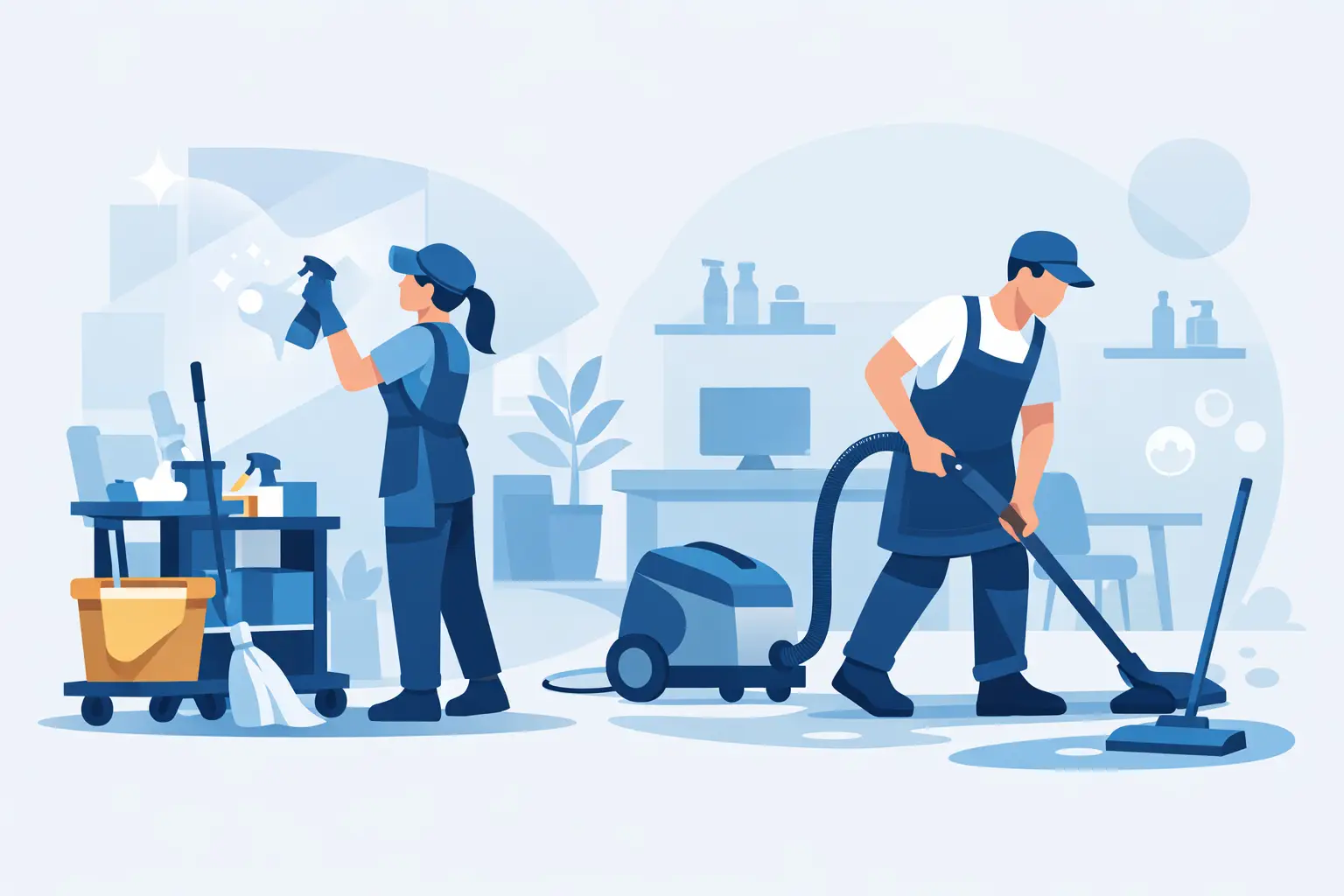
In practical terms, janitorial service is the regular cleaning support a business needs to maintain its facility over time. That usually includes cleaning restrooms, removing trash, vacuuming carpets, mopping hard floors, disinfecting touchpoints, dusting surfaces, and keeping common areas in order. The exact scope depends on the building, traffic levels, hours of operation, and the standards the business needs to meet.
For a small office, that might mean evening cleaning five nights a week with extra attention to breakrooms and conference rooms. For a larger commercial property, it may involve multiple shifts, restroom restocking, lobby upkeep, floor care, and ongoing attention to high-traffic areas throughout the day. The core idea is the same: janitorial cleaning services are structured to support daily operations on a recurring basis.
That recurring structure is what separates janitorial work from many specialty cleaning projects. A janitorial provider is not only cleaning what is visible. They are helping the facility run smoothly by preventing buildup, maintaining standards, and reducing the risk of the space falling below expectations.
What Janitorial Services Usually Include
Most commercial janitorial programs cover a familiar group of tasks, but the frequency and level of detail can vary widely. A professional scope of work often includes trash collection, liner replacement, restroom cleaning and sanitizing, sink and fixture wipe-downs, floor care, dusting, spot cleaning glass, kitchen and breakroom cleaning, and disinfecting shared surfaces.
Depending on the account, the service may also include supply monitoring, lobby detailing, elevator cleaning, touchpoint disinfection, interior window cleaning, and routine checks for presentation issues. In some facilities, janitorial teams also handle light maintenance support tied to cleanliness, such as noticing soap dispenser issues, reporting spills, or flagging areas that need special attention before they become larger problems.
This is where customization becomes important. A law office, warehouse, daycare, and medical office do not need the same cleaning plan. Even two office buildings of the same size can require very different schedules if one has heavy visitor traffic and the other operates on a hybrid schedule. Good janitorial service is shaped around how the building is actually used.
Janitorial Cleaning vs. Commercial Deep Cleaning
One reason people ask what is janitorial cleaning services is because the term gets confused with deep cleaning. They are related, but they are not the same thing.
Janitorial service focuses on ongoing maintenance. It is designed to keep the environment consistently clean through repeated service visits. Deep cleaning is more periodic and intensive. It often targets buildup in areas that are not addressed as thoroughly in routine service, such as detailed baseboards, grout, vents, high dusting, carpet extraction, or floor stripping and waxing.
A business may need both. Routine janitorial care keeps conditions under control, while periodic deep cleaning resets areas that experience wear over time. If a company relies only on occasional deep cleaning and skips routine janitorial support, the facility usually starts showing it quickly. Restrooms decline, floors lose their appearance, trash accumulates, and the building stops reflecting the standards of the business inside it.
Why Businesses Rely on Janitorial Services
For most commercial facilities, the value of janitorial service is not limited to appearance. Cleanliness affects employee experience, visitor perception, operational flow, and in some industries, compliance and safety.
A consistently maintained workplace helps reinforce professionalism. Clients notice when lobbies, restrooms, and meeting spaces are clean. Employees notice when breakrooms are sanitary and shared spaces are cared for. Property managers notice when vendors are dependable enough to work around tenant schedules without creating new problems.
Reliability is often the deciding factor. Many businesses are not looking for the cheapest cleaning option. They are looking for a partner who shows up as scheduled, follows the agreed scope, communicates clearly, and adapts when business conditions change. That is especially true in facilities that need after-hours service, weekend support, or quick response when unexpected issues come up.
How Janitorial Service Plans Are Built
A professional janitorial plan usually starts with the facility itself. Size matters, but layout, occupancy, flooring types, traffic volume, and business hours matter just as much. A facility with public-facing restrooms and constant foot traffic will need a different service rhythm than a back-office workspace with limited visitors.
The cleaning schedule is then built around those conditions. Some buildings need daily evening service. Others need day porter support, several visits per week, or a combination of routine cleaning and scheduled specialty work. In higher-demand environments, flexibility is essential. If the facility hosts events, operates across shifts, or has sensitive access requirements, the service plan should match that reality.
This is one area where a one-size-fits-all proposal often falls short. If the scope is too light, standards slip. If it is too broad without purpose, the client pays for work that does not match operational needs. The best janitorial plans are specific, realistic, and easy to measure.
What to Look for in a Janitorial Provider
A vendor may offer janitorial services on paper, but execution is what matters. Commercial decision-makers usually need more than a task list. They need confidence that the provider can perform consistently, respond quickly, and work with minimal disruption.
Start with service reliability. Does the company have systems for scheduling, supervision, and quality control? Can they support your business after hours if needed? Are they equipped to adjust service levels when occupancy changes or seasonal traffic increases?
Customization is just as important. A strong provider does not force every facility into the same package. They assess the building, identify priorities, and create a scope that reflects how the space operates. For businesses in the Chicagoland market, that can include weather-related floor care needs, shifting staffing levels, and service windows that protect business continuity.
Communication also matters more than many companies expect. If something is missed, needs to be escalated, or requires a schedule change, the response should be prompt and professional. Janitorial service is recurring by nature, so the relationship needs to function well over time. That is one reason businesses often prefer a partner with a dependable service model rather than a vendor focused only on winning the bid.
When Janitorial Cleaning Becomes a Business Asset
The strongest janitorial programs do more than maintain appearances. They reduce friction for the people responsible for the facility. When cleaning is handled well, managers spend less time chasing vendors, addressing complaints, or reacting to preventable issues.
That operational relief has real value. It protects the experience of employees and visitors, supports a healthier environment, and helps the business present itself the way it intends to. In settings with multiple stakeholders, such as office buildings, medical properties, and shared commercial spaces, reliable janitorial service can also help maintain trust across tenants, staff, and ownership.
For companies that need consistency, customized planning, and support outside standard hours, a provider like Americlean Professional Services fits that role best when the service is aligned with the building rather than forced into a generic package.
So, what is janitorial cleaning services? It is the recurring, structured care that keeps a commercial facility clean, professional, and ready for business day after day. If you are choosing a provider, the smartest next step is to look beyond the checklist and ask whether the service plan truly supports the way your facility operates.