If you manage a workplace, you can usually tell within a week whether your cleaning vendor is helping operations run smoothly or creating more work. Overflowing trash, missed restrooms, dusty entryways, and inconsistent service do more than affect appearance. They reflect on your business, your standards, and your day-to-day control of the facility. That is why many decision-makers ask, what is commercial janitorial services, and how is it different from basic cleaning?
Commercial janitorial services are ongoing cleaning and maintenance services designed for business environments. Instead of a one-time deep clean, janitorial service supports a facility on a recurring schedule - daily, several times per week, weekly, or according to the building's traffic, hours, and operational needs. The goal is consistency. A professional janitorial partner helps keep the workplace clean, presentable, sanitary, and ready for employees, customers, tenants, and visitors.
What Is Commercial Janitorial Services in Practical Terms?
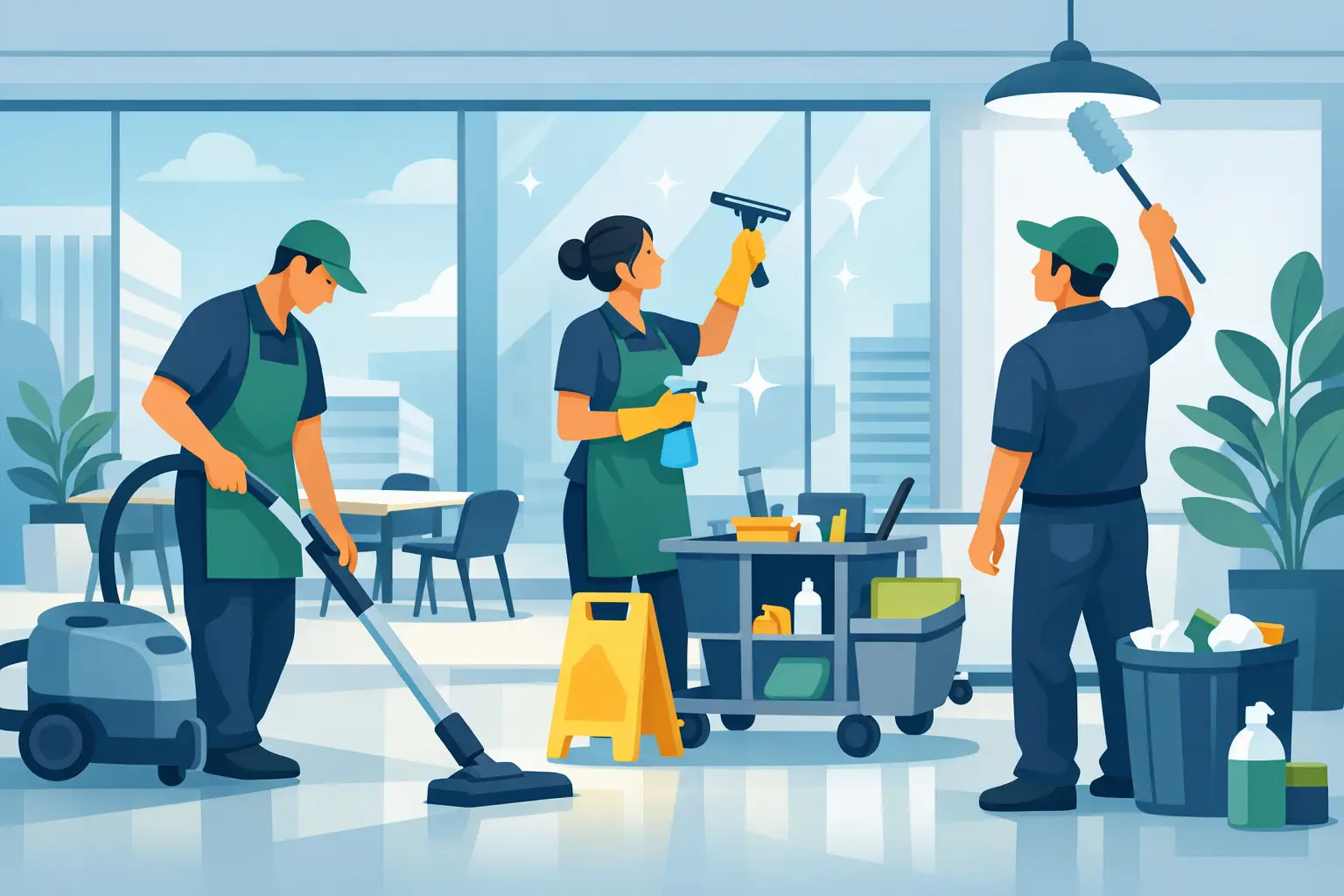
In practical terms, commercial janitorial services cover the routine tasks required to maintain a professional facility over time. That usually includes cleaning restrooms, removing trash, vacuuming carpets, mopping hard floors, dusting surfaces, wiping touchpoints, cleaning breakrooms, and maintaining common areas.
The exact scope depends on the property. An office suite does not need the same service plan as a medical building, warehouse office, school, retail location, or multi-tenant commercial property. A well-run janitorial program is built around how the space is actually used. High-traffic entrances may need frequent attention. Shared restrooms may require multiple cleanings in a day. Conference rooms, lobbies, and reception areas often need a higher presentation standard because they are visible to clients and guests.
That is one of the biggest misconceptions about janitorial work. Many people assume it is a fixed checklist. In reality, quality commercial janitorial service should be customized. The right provider adjusts staffing, timing, and task frequency to support your business instead of forcing your facility into a generic package.
What Commercial Janitorial Services Typically Include
Most recurring janitorial programs focus on the daily or weekly needs that keep a commercial space functioning well. This often includes floor care, restroom sanitation, waste removal, surface cleaning, and replenishment of consumables if that is part of the agreement.
In office environments, janitorial teams usually handle workstations on an agreed scope, clean common areas, maintain kitchens or breakrooms, and keep floors and glass presentable. In larger facilities, service may also include lobby detailing, elevator cleaning, stairwell maintenance, and spot cleaning throughout the day.
Some providers also offer related support such as carpet cleaning, floor stripping and waxing, window cleaning, post-construction cleanup, or disinfecting services. These may fall outside standard janitorial service and be scheduled separately. That distinction matters when comparing proposals. One company may include certain tasks in a recurring program, while another prices them as specialty services.
Janitorial Services vs. Commercial Cleaning
The terms are often used interchangeably, but there is a difference.
Janitorial services generally refer to routine, recurring maintenance. Think of the daily and weekly work that keeps a building in working order. Commercial cleaning can be a broader category that includes janitorial work as well as larger-scale or occasional projects such as deep carpet extraction, high dusting, floor restoration, or detailed sanitation after an event or renovation.
For business owners and facility managers, the distinction is useful because it affects service planning and budget expectations. If your facility only hires periodic deep cleaning but lacks regular janitorial support, cleanliness tends to decline between visits. If you only schedule basic recurring service but ignore periodic restorative work, surfaces and flooring can wear down faster and the space may still look tired.
The strongest approach is usually a combination of both - routine janitorial maintenance for consistency and scheduled specialty cleaning for longer-term asset care.
Why Businesses Invest in Commercial Janitorial Service
A clean building does more than look professional. It supports operations.
For employees, it creates a more organized and sanitary work environment. For customers and visitors, it reinforces confidence in the business. For property managers, it protects the presentation and condition of the building. For operations leaders, it reduces one more source of complaints, follow-up, and avoidable disruption.
There is also a risk management component. Restrooms, entryways, and shared surfaces need regular attention to reduce hygiene concerns and prevent minor maintenance issues from becoming larger problems. Dust buildup, neglected floors, and unmanaged waste can affect indoor appearance, safety, and overall perception of the facility.
That said, the value of janitorial service depends heavily on consistency. A low-cost vendor that misses tasks, changes crews constantly, or lacks supervision can create more internal oversight for your team. Saving money on paper does not help much if your staff has to monitor quality, reopen tickets, or address complaints from tenants and visitors.
What to Expect From a Professional Provider
A professional commercial janitorial company should do more than complete tasks. It should provide structure, accountability, and responsiveness.
That starts with a clear scope of work. You should know what is being cleaned, how often, at what time, and under what service expectations. There should also be a communication process for adjustments, special requests, access coordination, and issue resolution.
Reliability is especially important in commercial environments with tight schedules or extended hours. Many businesses need cleaning completed after close, before opening, or during low-traffic windows. Others need support beyond standard business hours to address urgent issues without interrupting operations. In those cases, a provider's staffing depth and responsiveness matter just as much as the cleaning itself.
Quality control is another key differentiator. A provider should have processes for inspections, crew management, and performance follow-up. Without that layer, service often becomes inconsistent over time, especially in larger facilities or multi-shift environments.
For many Chicagoland businesses, that is where a partner like Americlean Professional Services stands apart. The value is not just in cleaning a building. It is in delivering dependable service built around the facility's actual schedule, traffic patterns, and presentation standards.
How to Tell What Your Facility Actually Needs
Not every building needs nightly full-service janitorial support, but most commercial spaces need more than occasional cleanup. The right service level depends on occupancy, facility type, traffic, restroom usage, customer visibility, and compliance expectations.
A smaller office with limited public traffic may only need service a few times per week. A medical office, school, busy retail space, or multi-tenant property may need daily service or porter support throughout the day. Industrial or logistics facilities may need special attention in front-office areas, breakrooms, locker rooms, and high-traffic entries while keeping cleaning plans aligned with operational flow and safety requirements.
This is where customized planning matters. Over-servicing wastes budget. Under-servicing creates complaints and accelerates wear. A good provider will assess the space honestly and recommend a schedule that fits how the building operates, not just what is easiest to sell.
Signs Your Current Janitorial Service Is Falling Short
If you are reviewing vendors or trying to improve results, watch for patterns rather than isolated issues. One missed trash pull happens. Repeated inconsistency is a service problem.
Common warning signs include recurring restroom complaints, visible dust in customer-facing spaces, inconsistent floor appearance, poor communication, unannounced schedule changes, and a lack of follow-through on special requests. Another red flag is when your internal team has to keep managing the cleaning vendor to get expected results.
A janitorial partner should reduce facility friction, not add to it. The best service is often quiet and predictable. Things are clean, stocked, and handled without your staff needing to chase updates.
Choosing the Right Commercial Janitorial Partner
When evaluating providers, price matters, but it should not be the only factor. Service reliability, communication, supervision, flexibility, and customization have a direct impact on value.
Ask how the company builds service plans, how it handles after-hours support, how quality is monitored, and how quickly issues are resolved. Confirm whether the proposal reflects your real operating conditions, including occupancy patterns, access requirements, and any high-priority areas that affect client or tenant perception.
It also helps to choose a provider that understands local business expectations. In a market as varied as Chicagoland, commercial facilities range from professional offices and healthcare spaces to industrial sites and retail environments. A one-size-fits-all approach rarely holds up across those settings.
When people ask what is commercial janitorial services, the simplest answer is this: it is the ongoing work that keeps a business environment clean, functional, and ready for the people who use it every day. The better answer is that the right janitorial service protects your standards without disrupting your operation, and that is where real value begins.