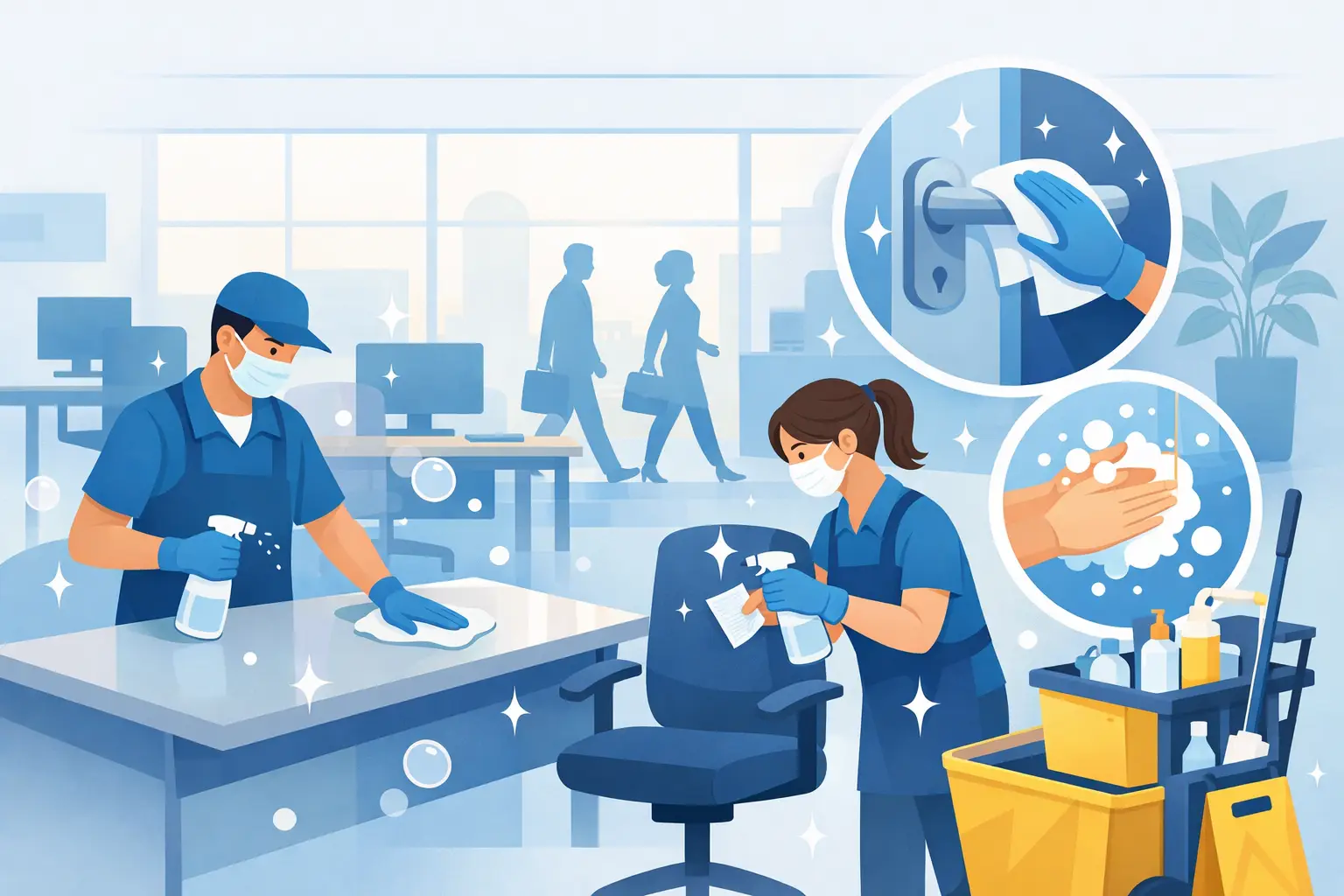
A busy office leaves a visible operational footprint by midday: fingerprints on glass doors, marked floors at reception, crowded restrooms, and shared surfaces used by dozens of people. Effective office sanitation for high traffic is not an occasional deep-cleaning task. It is a planned service strategy that keeps high-use spaces clean, presentable, and ready for employees, clients, and visitors throughout the day.
For property managers, office administrators, and operations leaders, the challenge is rarely deciding whether sanitation matters. The challenge is creating a service plan that matches actual occupancy, business hours, and the pace of the facility without disrupting work.
Why High-Traffic Offices Need a Different Plan
A standard nightly cleaning schedule may work well for a lightly occupied office with limited visitor traffic. It is often insufficient for facilities with active reception areas, shared conference rooms, busy breakrooms, public restrooms, elevator banks, or multiple shift changes.
High traffic concentrates soil, moisture, bacteria, and wear in a small number of areas. Floors near entrances collect salt, water, grit, and debris, especially during Chicago winters. Restrooms see repeated use throughout the day. Breakrooms accumulate spills and food waste quickly. Door handles, railings, copier controls, and conference room tables become shared touchpoints long before the evening cleaning crew arrives.
The result is not only a sanitation concern. It can affect workplace appearance, employee confidence, visitor impressions, odor control, and the life of flooring and other finishes. A clean office sends a clear message that the facility is managed with care. An inconsistent one can create doubts about the rest of the operation.
Start With Traffic, Not a Generic Checklist
The most dependable sanitation programs begin with a practical assessment of how people move through a building. A cleaning plan should reflect the spaces people use most, the times they use them, and the standards the organization needs to maintain.
Reception and entryways typically require the highest level of attention because they carry both exterior soil and first impressions. Restrooms need service based on usage volume, not simply a fixed end-of-day checklist. Breakrooms may need midday support if employees use them across staggered schedules. Conference rooms should be reset between important meetings when visitor experience is a priority.
A facility with 40 employees working one daytime shift needs a different plan than an office with 150 employees, rotating schedules, frequent client meetings, and a public-facing lobby. The same is true for professional offices, medical-adjacent workplaces, distribution offices, and mixed-use commercial buildings. The right frequency depends on occupancy and use patterns.
Identify the Spaces That Need Repeated Attention
Most high-traffic sanitation plans should prioritize four categories: entrances and lobbies, restrooms, breakrooms, and common touchpoints. These areas should receive more frequent service than private offices or low-use meeting rooms.
At entrances, the focus is on floor care, glass, door hardware, and waste removal. In restrooms, sanitation includes toilets, sinks, partitions, dispensers, floors, and replenishment of paper goods and soap. In breakrooms, it includes counters, tables, appliance exteriors, sinks, floors, and trash. Shared touchpoints include handles, switches, buttons, handrails, and frequently used equipment controls.
This does not mean every surface needs constant disinfecting. Over-cleaning low-risk, low-use areas can waste time and budget. A better approach directs labor where activity is highest and where a lapse in service will be noticed first.
Cleaning and Sanitizing Serve Different Purposes
Cleaning removes visible soil, dust, crumbs, residue, and other contaminants from a surface. Sanitizing reduces certain bacteria on surfaces to safer levels when completed correctly. Disinfecting is intended to address a broader range of pathogens and generally requires product-specific dwell time.
These terms are often used interchangeably, but they should lead to different service decisions. A visibly dirty surface must be cleaned before it can be effectively sanitized or disinfected. Applying a disinfectant over soil or food residue may not produce the intended result.
For offices, a practical approach is to clean high-use areas consistently and apply appropriate sanitation or disinfection procedures to shared touchpoints, restrooms, and other priority zones. Product selection, dilution, application method, and contact time all matter. Commercial cleaning teams should follow product labels and site-specific requirements rather than relying on a one-size-fits-all process.
Build Service Around the Workday
The timing of janitorial work can determine whether a sanitation plan feels dependable or disruptive. Evening service remains the right choice for many offices because it allows crews to complete detailed work after employees leave. However, high-traffic facilities often benefit from a combination of after-hours cleaning and scheduled daytime support.
A daytime porter can address restroom checks, lobby floors, spills, waste, and breakroom conditions while the office is occupied. This helps prevent small issues from becoming visible problems. After-hours crews can then complete full restroom sanitation, vacuuming, mopping, dusting, waste removal, and detailed touchpoint cleaning without interrupting meetings or focused work.
There is a trade-off. Daytime service adds cost, but it can be especially valuable in buildings with public visitors, large headcounts, events, or heavy restroom use. For offices with lower daytime volume, targeted midday checks may provide the right balance between presentation and budget.
Create Clear Response Procedures for Spills and Surprises
Even a well-designed schedule cannot prevent every issue. A restroom supply shortage, beverage spill, overflowing trash can, or wet entrance floor requires a fast response. Facility leaders should know who to contact, what response window to expect, and how urgent requests are handled outside normal business hours.
This is where vendor reliability becomes part of sanitation quality. A cleaning provider may perform well on routine tasks yet still create operational problems if it is difficult to reach when conditions change. Around-the-clock availability and clear communication are particularly useful for offices with extended hours, unpredictable weather, or special events.
Protect Floors From High-Traffic Wear
Flooring is one of the largest and most visible investments in an office. It also receives the most abuse. Grit carried in on shoes can scratch hard surfaces and wear down carpet fibers. Water tracked through an entryway creates slip risks and stains. Neglected spills can leave permanent marks or odors.
Entry matting is a simple but essential first line of defense. Mats should be large enough to capture moisture and debris before people reach finished flooring, and they need regular vacuuming or cleaning to remain effective. During wet or snowy conditions, entrances may require additional attention throughout the day.
Routine vacuuming, spot treatment, mopping, and periodic machine cleaning should be matched to the floor type and volume of traffic. Aggressive methods or the wrong products can damage finishes, while too little maintenance shortens the useful life of the surface. A customized floor care schedule protects both appearance and long-term maintenance costs.
Measure Quality Through Consistency
Office sanitation is successful when employees and visitors do not have to think about it. Restrooms are stocked and clean. Floors look maintained. Trash is removed on schedule. Shared spaces are ready for use. When these standards slip, people notice quickly.
Quality control should include routine inspections, clearly defined service scopes, and a process for addressing missed details. Facility managers should be able to identify what is cleaned, how often it is cleaned, and who is accountable for the result. A flexible service plan also makes it easier to adjust frequencies when staffing, occupancy, or seasonal conditions change.
Americlean Professional Services builds commercial cleaning plans around these operational realities, with dependable support for facilities that need consistent service outside standard business hours as well as during them.
Make Sanitation Part of Facility Operations
The strongest high-traffic sanitation programs are not built around a long checklist alone. They are built around the way a workplace operates. They account for visitor flow, employee schedules, weather, building layout, floor materials, and the level of presentation expected by the organization.
When the cleaning plan follows the actual rhythm of the office, sanitation becomes easier to maintain and less likely to interrupt the workday. That is the standard worth setting: a workplace that remains clean, prepared, and professional no matter how busy the day becomes.