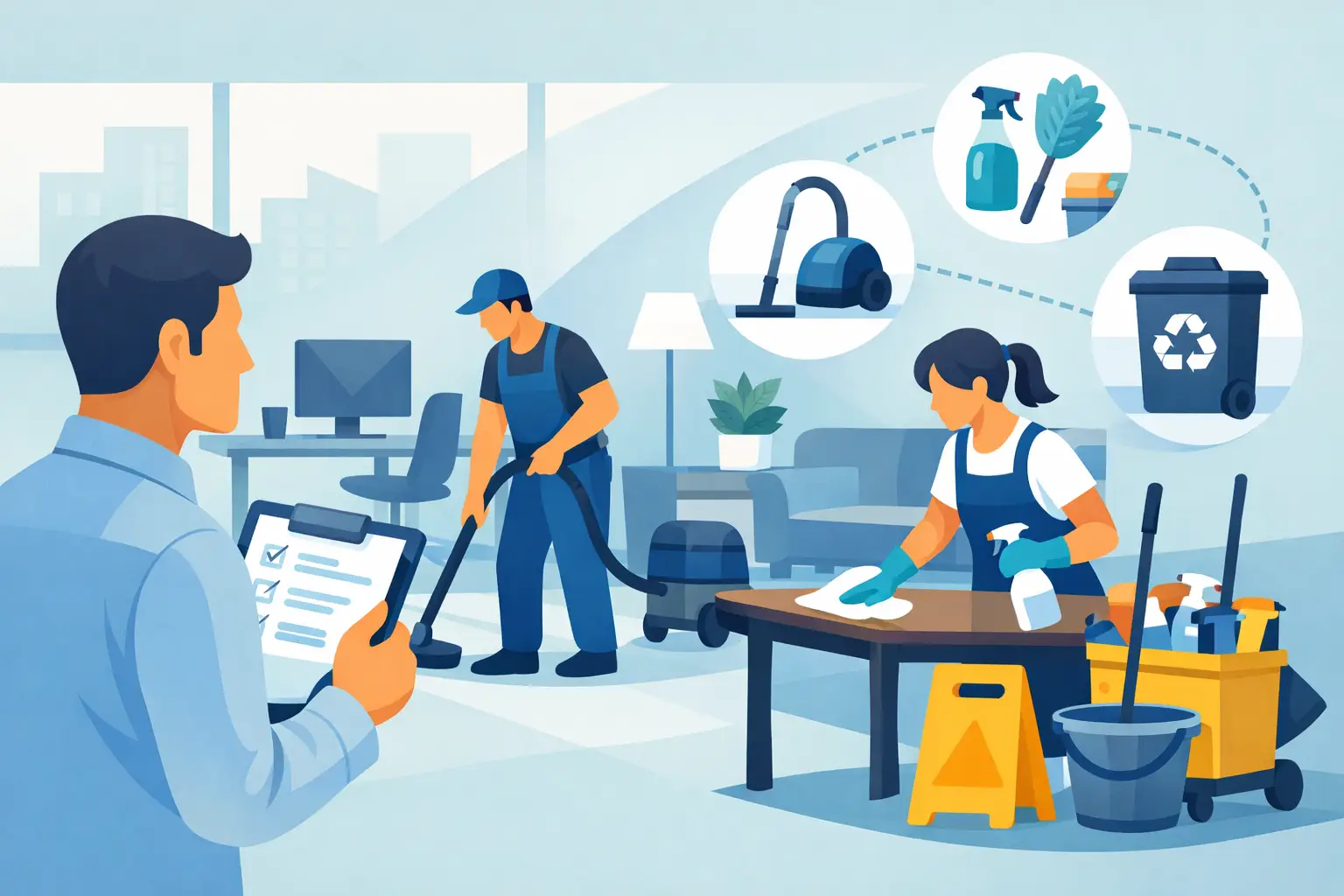
A missed trash pull or an overlooked restroom may seem minor until employees notice, visitors form an impression, or your team starts fielding complaints. That is why an office cleaning scope guide matters. It turns cleaning from a vague expectation into a defined service plan with clear tasks, frequencies, quality standards, and accountability.
For office managers, property managers, and operations leaders, scope is where most cleaning partnerships either stabilize or start to slip. If the scope is too broad, expectations become subjective. If it is too narrow, critical tasks get missed. A strong scope creates consistency, protects presentation standards, and helps your cleaning provider work around your business instead of disrupting it.
What an office cleaning scope guide should define
At its core, an office cleaning scope guide is a working document that explains what will be cleaned, how often it will be cleaned, and what level of service is expected. It should also identify site-specific details that affect scheduling, security, supply management, and access.
A useful scope does more than list general tasks like vacuuming or disinfecting. It breaks work down by area and by frequency. Reception may need daily touchpoint disinfection and glass attention, while a private conference room may only need full service a few times a week depending on usage. Breakrooms, restrooms, and shared workstations usually require more frequent care than low-traffic offices or storage areas.
This is also where standards need to be stated plainly. For example, emptying trash is not the same as relining receptacles and removing debris around the bin. Floor care is not just vacuuming if visible edge buildup remains along walls and furniture. The more clearly the expected result is described, the easier it becomes to measure service quality.
Start with how the office actually operates
The right cleaning scope starts with building usage, not a generic checklist. Two offices with the same square footage can need very different service plans. A professional services suite with predictable weekday traffic will not have the same requirements as a medical-adjacent administrative office, a coworking floor, or a client-facing headquarters with frequent visitors.
Occupancy patterns matter. So do hours of operation, shift schedules, and the number of shared spaces. If employees eat at their desks, workstation areas may need more frequent detail attention. If the office hosts regular meetings, conference rooms and entry areas may need priority service. If the building sees heavy winter foot traffic in Chicagoland, floor maintenance and entry mat management become more important during certain months.
That is why a good provider asks operational questions before finalizing scope. When is the building occupied? Which areas are client-facing? Are there secure zones, compliance requirements, or after-hours access restrictions? These details shape a service plan that fits the facility rather than forcing the facility to adapt to a standard package.
How to organize scope by area and frequency
The most effective scopes are structured in a way that is easy to review and easy to enforce. Usually, that means organizing tasks by space type and assigning a clear frequency to each one.
Daily cleaning priorities
Daily service typically covers the areas that affect health, appearance, and day-to-day function. That often includes restrooms, breakrooms, reception spaces, main walkways, trash removal, touchpoint cleaning, and spot cleaning on glass or hard floors. In many offices, daily care also includes vacuuming high-visibility carpeted areas and wiping common surfaces that collect fingerprints, dust, or food residue.
Not every office needs every task every day. A smaller office with limited foot traffic may not require full-room vacuuming nightly, while a busy multi-tenant suite probably will. The key is matching daily tasks to actual use and visible impact.
Weekly and periodic tasks
Weekly tasks usually cover detail work that supports the daily routine. This can include dusting low and high surfaces, cleaning interior glass more thoroughly, wiping chair rails and baseboards, detailing conference rooms, and addressing buildup in corners or under furniture.
Periodic tasks are just as important because they protect the long-term appearance of the space. Carpet extraction, hard floor scrubbing, polishing, upholstery cleaning, and high dusting often fall into a monthly, quarterly, or as-needed category. If these services are not documented in the scope, they tend to be forgotten until appearance declines.
The details that prevent scope gaps
Most service issues are not caused by unwillingness. They come from assumptions. One party assumes a task is included, and the other does not. That is why cleaning scope should spell out the details that often get skipped in initial conversations.
Consumables are one example. Will the cleaning company restock paper products, soap, and liners? Will they supply those items or just replenish owner-provided inventory? Another common gap is day porter or daytime support. If spills, restroom resets, or lobby touchups are needed during business hours, that should be listed separately from after-hours janitorial service.
Special surfaces deserve attention too. Natural stone, specialty flooring, stainless steel, and high-end finishes may require specific products and methods. Electronics-adjacent areas, executive offices, and rooms with confidential materials may also need service limitations or special access procedures. These are not small administrative notes. They affect service quality, liability, and scheduling.
Office cleaning scope guide and quality control
A scope only works if it can be checked. That means the document should support quality control, not just serve as a sales attachment. If a provider says they deliver premium service, the scope should make that visible through defined outcomes and review points.
A practical approach is to tie the scope to inspections. Supervisors or facility contacts should be able to walk the site and confirm whether tasks were completed to standard. Were restroom dispensers stocked? Were floors free of visible debris? Was glass cleaned to the agreed frequency? When expectations are observable, performance discussions stay objective.
This is also where responsiveness matters. Offices are not static environments. Headcount changes, departments move, usage shifts, and seasonal conditions affect cleaning needs. A dependable vendor treats scope as a managed service document that can be adjusted, not as a fixed list that stops evolving after onboarding.
Customization matters more than square footage alone
Square footage helps estimate labor, but it does not tell the whole story. A 10,000-square-foot office with low occupancy may need less frequent service than a 6,000-square-foot office with constant visitor traffic, shared kitchens, and multiple restrooms. Pricing and service planning based only on size often create misalignment.
A better approach weighs traffic levels, room mix, surface types, business hours, and service expectations. This is where customized planning becomes valuable. A cleaning partner should be able to recommend a scope that supports your environment, whether you need discreet after-hours janitorial work, daytime support, or periodic specialty services layered into a recurring program.
For many organizations, the best scope is not the one with the most tasks. It is the one that keeps the facility consistently presentable without overservicing low-impact areas or underservicing high-use spaces. That balance protects both quality and budget.
Questions to ask before approving the scope
Before signing off on a cleaning agreement, decision-makers should review the scope with the same care they would give any other operational contract. Ask whether frequencies reflect actual building use, whether high-touch and high-visibility areas are clearly prioritized, and whether periodic services are documented instead of left to verbal discussion.
It is also worth confirming who manages communication, how service issues are handled, and whether emergency or after-hours support is available when needs change. Reliability is not just about showing up on schedule. It is about having a provider that can respond when your facility schedule, tenant activity, or cleaning priorities shift unexpectedly.
For businesses that need consistent commercial support, this is where a relationship-driven provider stands apart. Companies such as Americlean Professional Services build scope around the client’s operation, not around a preset template. That creates better alignment between service delivery and the real demands of a working office.
When to update your office cleaning scope guide
If your current service feels inconsistent, the issue may not be effort. It may be an outdated scope. Any change in staffing, hours, layout, traffic patterns, or compliance requirements is a reason to revisit the document. Renovations, return-to-office shifts, tenant turnover, and seasonal demand can all affect what clean actually needs to look like.
A scope review does not have to be complicated. It just has to be honest. Look at the areas that draw complaints, the tasks that seem vague, and the parts of the building that now get more or less use than they did when service began. Small revisions often make a measurable difference in consistency.
A well-built cleaning scope gives your office something every facility needs - clarity. When expectations are defined, service becomes easier to manage, easier to measure, and far more reliable over time.