
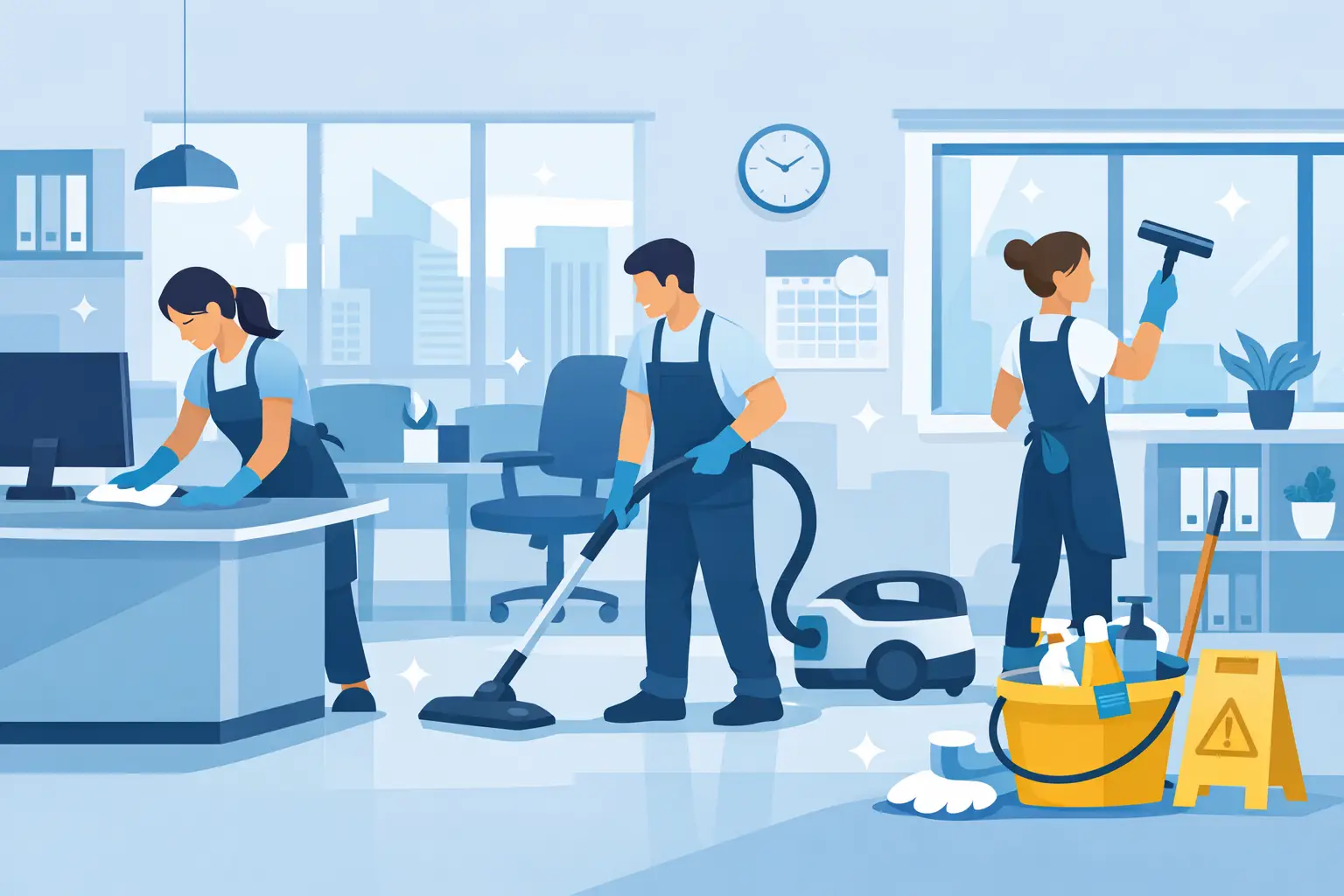
A cleaning schedule usually starts getting attention after something slips - dusty surfaces in a client-facing lobby, restrooms that never seem fully reset, or trash buildup by the end of the day. That is why an effective office cleaning frequency guide matters. It helps business owners and facility leaders move from reactive cleanup to a schedule that supports presentation, health, and daily operations.
The right frequency is not the same for every office. A small professional suite with light foot traffic does not need the same service cadence as a shared workspace, medical-adjacent office, or high-volume administrative center. Occupancy levels, building layout, business hours, and client traffic all affect how often each area should be cleaned.
How to use an office cleaning frequency guide
A practical office cleaning frequency guide should not treat the entire workplace as one cleaning zone. Offices perform better when cleaning frequency is assigned by area and by risk. Restrooms, breakrooms, entrances, and shared touchpoints typically need more attention than private offices or low-use storage rooms.
This is also where many businesses overspend or underserve the space. If every room is cleaned on the same schedule, high-traffic areas decline too quickly while low-use spaces may be serviced more often than necessary. A better approach is to match cleaning frequency to actual usage.
For most commercial offices, the schedule should be built around four levels: daily, several times per week, weekly, and monthly or periodic service. The mix depends on your facility and expectations.
Daily cleaning tasks that usually should not wait
Daily service is the baseline for the spaces employees and visitors use constantly. If your office is occupied Monday through Friday, these areas often need attention every business day, especially in larger workplaces or buildings with regular visitors.
Restrooms are at the top of the list. Toilets, sinks, mirrors, dispensers, counters, and floors should generally be cleaned and restocked daily. In offices with heavier traffic, multiple shifts, or public access, restrooms may need service more than once per day. Waiting too long here creates immediate concerns around sanitation, odor, and appearance.
Breakrooms and kitchenettes also benefit from daily service. Counters, sinks, appliance exteriors, tables, and floors collect residue quickly. Even a well-managed staff kitchen can look neglected after one busy day. Daily cleaning helps keep food-related areas sanitary and prevents small issues from becoming harder-to-remove buildup.
Trash removal is another daily requirement in most offices. Reception areas, breakrooms, restrooms, and shared work areas should not carry over waste from one day to the next. Private offices may vary depending on usage, but common-area trash and recycling usually need a daily reset.
Entryways and lobbies deserve daily attention because they shape first impressions and track in dirt faster than any other space. Glass doors, front desk surfaces, hard floors, and mats can all show wear quickly. In Chicago-area weather, especially during winter and rainy periods, entrance cleaning may need extra frequency to manage salt, moisture, and debris.
Shared touchpoints should also be part of the daily plan. Door handles, elevator buttons, light switches, conference tables, copier areas, and reception counters are used repeatedly throughout the day. In some environments, one thorough daily disinfection is enough. In others, especially where occupancy is dense, extra touchpoint service may make sense.
What should be cleaned several times per week
Not every area needs full daily service, but many offices have zones that should be cleaned more than once a week. This middle tier often keeps the building looking consistently maintained without adding unnecessary labor.
Conference rooms are a common example. If meeting spaces are used often, tables, chairs, glass, and floors can start to look tired quickly. Cleaning them two to three times per week, or more if usage is high, helps maintain a professional setting for staff and visitors.
Open office areas may also fall into this category. Vacuuming or floor care in lightly used spaces might not be essential every day, but several times per week is often the right balance. The same applies to shared desks, collaboration zones, and internal glass partitions that show fingerprints and dust.
Spot cleaning is important here as well. Smudges on glass, marks on walls, spills on carpet, and fingerprints on doors rarely follow a neat schedule. A good cleaning plan leaves room for these visible issues before they affect the overall condition of the office.
Weekly office cleaning frequency guide by task
Weekly cleaning is where broader detail work usually fits. These are the tasks that support the day-to-day routine but do not always need constant repetition.
Dusting desks, ledges, windowsills, furniture, and low-reach surfaces is often a weekly task in standard office settings. The exact timing depends on air movement, equipment usage, and how quickly dust becomes visible. Offices with more paper handling, older HVAC systems, or nearby warehouse activity may need dusting more often.
Floor care beyond basic daily maintenance also often lands on a weekly cycle. For carpeted offices, that may mean more complete vacuum coverage. For hard floors, it may include machine scrubbing or a more thorough mop and detail pass. Weekly attention keeps flooring from showing early wear and helps preserve a cleaner overall appearance.
Private offices may also be cleaned on a weekly or twice-weekly basis if occupancy is low and employees are not seeing clients in those spaces. That does not mean ignoring them. It means adjusting service to actual use, which is often the most efficient choice.
Monthly and periodic tasks that protect the space
Some cleaning work does not need frequent repetition, but skipping it too long can shorten the life of finishes and make the office feel less professionally maintained.
High dusting, baseboards, vents, blinds, interior window detailing, and upholstery cleaning often fit into a monthly or periodic rotation. These tasks are easy to postpone because they are less visible at first. Over time, though, they affect air quality, appearance, and the perception of care.
Floor finishing services also belong in this category. Hard floor buffing, burnishing, scrubbing, and refinishing depend on material type and traffic volume. Carpet extraction is similar. It is not a daily or even monthly need for every office, but periodic deep service protects flooring investment and supports a better long-term standard.
This is where customized planning matters most. A law office, logistics hub, nonprofit headquarters, and multi-tenant office suite may all need different periodic service intervals even if their square footage looks similar on paper.
Factors that change cleaning frequency
The most accurate office cleaning frequency guide always accounts for operating conditions. Headcount is one factor, but it is not the only one. Visitor traffic, shared workspace density, food consumption, weather exposure, and business hours all influence the right schedule.
A client-facing office usually needs a tighter frequency than a back-office administrative site. A company with staggered shifts may need after-hours service that resets the space without interrupting work. Seasonal changes matter too. Winter slush, spring rain, and fall debris can increase the need for floor and entry maintenance.
There are also compliance and health considerations. Offices connected to healthcare, finance, education, or regulated industries may require more structured cleaning documentation and stronger consistency around sanitation practices. In those cases, under-cleaning creates more than an appearance problem.
When daily service is worth the investment
Some companies hesitate to increase frequency because they assume less service always saves money. Sometimes it does. But in many offices, daily janitorial support is more cost-effective than repeated catch-up work, complaint management, or early wear on surfaces and flooring.
If employees regularly notice restroom issues, overflowing trash, dirty floors, or breakroom buildup, the current schedule is probably too light. If your team is wiping counters, restocking supplies, or cleaning common areas on its own, that is also a sign that the frequency no longer matches the facility.
The goal is not to buy the most cleaning. The goal is to buy the right cleaning at the right intervals. That is what keeps standards high without disrupting operations.
Building a schedule that fits your office
A strong plan starts with a walkthrough, not a generic package. The best cleaning frequencies are based on how your office actually functions - when people arrive, where they gather, what clients see first, and which areas wear down fastest.
For many Chicagoland businesses, that means combining daily service in high-use zones with weekly and periodic care in lower-traffic spaces. It also means having flexibility. If occupancy changes, your cleaning plan should be able to change with it. That is one reason many organizations prefer a partner like Americlean Professional Services that can tailor service levels and support facilities around the clock.
A clean office should not depend on guesswork. When the cleaning frequency matches the way your building is used, the space stays presentable, safer, and easier to manage - and your team can stay focused on the work that actually moves the business forward.