
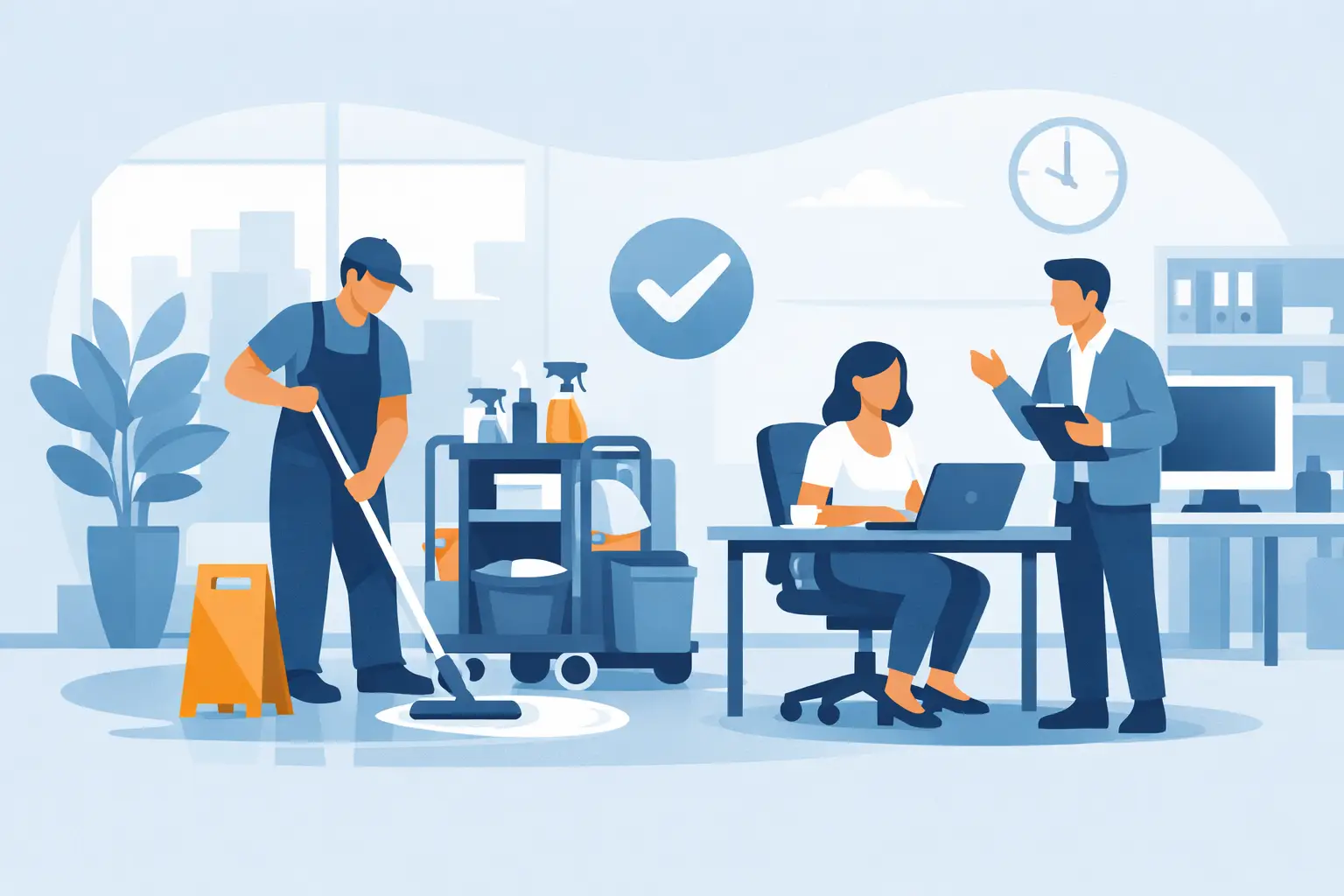
A cleaning crew should not slow down your business. Yet that is exactly what happens when trash is collected during peak foot traffic, restrooms are serviced during customer rushes, or floor work is scheduled with no regard for meetings, deliveries, or shift changes. If you are figuring out how to reduce cleaning disruptions, the real issue is usually not cleaning frequency. It is planning.
For business owners, property managers, and facility leaders, disruption shows up in practical ways. Employees lose access to work areas. Visitors walk around equipment. Noise interrupts calls and meetings. High-touch spaces get cleaned at the wrong time, which creates inconvenience without improving standards. In most cases, the fix is not less cleaning. It is a better-aligned cleaning plan.
How to reduce cleaning disruptions starts with scheduling
The fastest way to improve outcomes is to match cleaning activity to how the building actually operates. That sounds obvious, but many service plans are built around the vendor's convenience instead of the client's schedule.
A facility with steady daytime traffic may need most janitorial work completed after hours. A medical office may need touchpoint cleaning between patient blocks but floor care overnight. A multi-tenant property may need lobby attention early in the morning, with back-of-house work reserved for low-occupancy periods. The right answer depends on the building, the hours, and the people using the space.
This is where fixed, one-size-fits-all service schedules fall short. If your cleaning team always arrives at the same hour regardless of occupancy, some disruption is almost guaranteed. A more effective approach is to break service into windows. Quiet tasks can happen during business hours if needed, while louder or access-limiting work is moved to evenings, overnight, or weekends.
That level of coordination matters in Chicagoland facilities where operating hours can vary widely by tenant, season, and industry. A cleaning schedule that works for a standard office may not work for a manufacturing support space, a school-adjacent facility, or a client-facing commercial property.
Build the scope around business priorities
Disruption often starts before the first mop bucket rolls in. It begins with a vague scope of work.
When expectations are too general, crews make real-time decisions about what to clean first, what can wait, and which areas are available. That is when a conference room gets serviced five minutes before a leadership meeting or a restroom deep clean starts during your busiest visitor window.
A clear scope creates order. It should identify which areas are business-critical, which spaces require daytime attention, and which tasks must be completed off-hours. It should also distinguish between routine daily cleaning and periodic specialty work such as carpet extraction, hard floor refinishing, high dusting, or detailed sanitizing.
Those distinctions matter because not every task carries the same operational impact. Emptying trash in a side office is low disruption. Stripping and finishing floors in a main corridor is high disruption. Both may be necessary, but they should not be planned the same way.
The strongest cleaning programs treat disruption as a scheduling variable, not an unavoidable side effect.
Identify high-sensitivity areas first
Some spaces tolerate service activity better than others. Break rooms, storage areas, and back offices may allow more flexibility. Boardrooms, reception areas, patient-facing spaces, classrooms, and active production support areas usually do not.
If you want to reduce interruptions, start by identifying your high-sensitivity zones. Then assign service times, access rules, and communication expectations to each one. This simple step prevents crews from having to guess their way through your day.
Communication should be operational, not casual
One of the most common reasons cleaning becomes disruptive is poor communication between the facility and the service team. A building may have a special event, adjusted hours, tenant move-in, surprise inspection, or temporary restricted area. If that information does not reach the crew in time, even a good cleaning company can walk into avoidable problems.
Strong communication systems keep service aligned with changing conditions. That does not require long meetings or complicated software. It requires a reliable process.
For some facilities, that means a single point of contact who approves schedule changes. For others, it means a shared service calendar or an escalation protocol for after-hours requests. What matters is consistency. If updates are sent through different channels to different people, details get missed.
This is especially important for recurring accounts with multiple service days each week. The more often a crew is on site, the more valuable it becomes to have clear reporting on locked areas, event schedules, maintenance conflicts, and priority requests.
Day porters and after-hours crews need different instructions
A daytime porter supports an active environment. An overnight janitorial crew works in an empty or low-traffic space. Those are different operating conditions, and the work instructions should reflect that.
Daytime cleaning requires discretion, low-noise methods, and tight coordination with staff and visitors. After-hours cleaning allows for broader access and more intensive work, but it still requires awareness of alarm protocols, restricted suites, and next-day readiness. When providers use the same approach for both, disruption tends to increase.
Use the right service model for the facility
Businesses sometimes try to solve disruption by cutting service frequency. That can backfire. Less frequent cleaning often leads to bigger, more noticeable cleaning events that demand more equipment, more labor, and more time in occupied areas.
A better solution may be to change the service model.
For example, a busy office may perform better with light daytime touchpoint service and deeper nightly cleaning rather than one heavy daytime visit. A property with frequent client traffic may need a porter for public area upkeep and separate scheduled crews for restrooms and floor care. A warehouse office may need routine janitorial support in administrative spaces and a completely different schedule in operational zones.
This is why customized maintenance planning matters. The goal is not simply to assign hours. The goal is to deliver a clean facility with the least impact on the people using it.
A dependable commercial cleaning partner should be able to adjust frequency, staffing, and task timing without lowering standards. That flexibility is often what separates a reactive vendor from a reliable long-term provider.
Plan periodic work before it becomes a problem
If routine cleaning is the daily engine, periodic cleaning is the preventive maintenance. It is also where major disruptions often happen.
Carpet cleaning, floor refinishing, window cleaning, detailed restroom restoration, and high dusting can all affect access, noise levels, drying time, and safety. If those services are booked at the last minute, they tend to land at inconvenient times.
The better approach is to map periodic work to your operational calendar. Schedule heavier services around holidays, low-occupancy periods, planned closures, or slower business cycles. This gives your team time to prepare, notify occupants, and coordinate access.
It also protects your facility presentation. Waiting too long between periodic services usually means the work becomes more intensive when it finally happens. More intensive work usually means more disruption.
Measure quality without creating more friction
Oversight matters, but the way you monitor cleaning performance can either support smoother operations or complicate them.
If every issue has to be chased down after the fact, your team ends up spending time documenting problems instead of preventing them. A better system uses regular inspections, clear quality standards, and prompt follow-up while the service cycle is still active.
That does not mean every building needs formal scorecards. But it does mean expectations should be visible and measurable. Were priority spaces serviced on time? Were supplies restocked before business hours? Were access-sensitive tasks completed during approved windows? When these basics are tracked consistently, disruption tends to drop because the service team can correct course early.
For many commercial clients, reliability is just as important as appearance. A floor may look clean, but if the process to clean it disrupts employees or customers every week, the plan is not working.
How to reduce cleaning disruptions over the long term
Long-term improvement comes from treating janitorial service as part of facility operations, not as an isolated vendor task. Cleaning affects building access, employee experience, safety, presentation, and even how confidently you host clients and visitors.
That is why the most effective programs are built around your business rhythms. They account for occupancy patterns, sensitive areas, seasonal changes, and the reality that schedules shift. In practice, how to reduce cleaning disruptions comes down to four things: smart timing, a defined scope, clear communication, and a service model tailored to the way your facility runs.
When those pieces are in place, cleaning becomes what it should be - consistent, professional, and largely unnoticed. For businesses that need dependable support without interruption, that is not a luxury. It is part of running a well-managed property.
If your current service still feels like an obstacle course for staff or visitors, the issue may not be the cleaning itself. It may be that the plan was never built around your operation in the first place.