A lobby can look spotless at 8:00 a.m. and feel neglected by noon. Trash builds up, restrooms need attention, fingerprints show on glass, and high-traffic areas start to reflect the pace of your business. That is where the question of day porter vs janitorial services becomes more than a cleaning decision. It becomes an operational one.
For property managers, office administrators, and facility leaders, the right choice depends on when your building needs support, how much traffic it handles, and how visible cleanliness is throughout the day. In many commercial settings, the answer is not simply one or the other. It is understanding the role each service plays and how they work together to keep a facility clean, safe, and presentable without disrupting daily operations.
Understanding day porter vs janitorial services
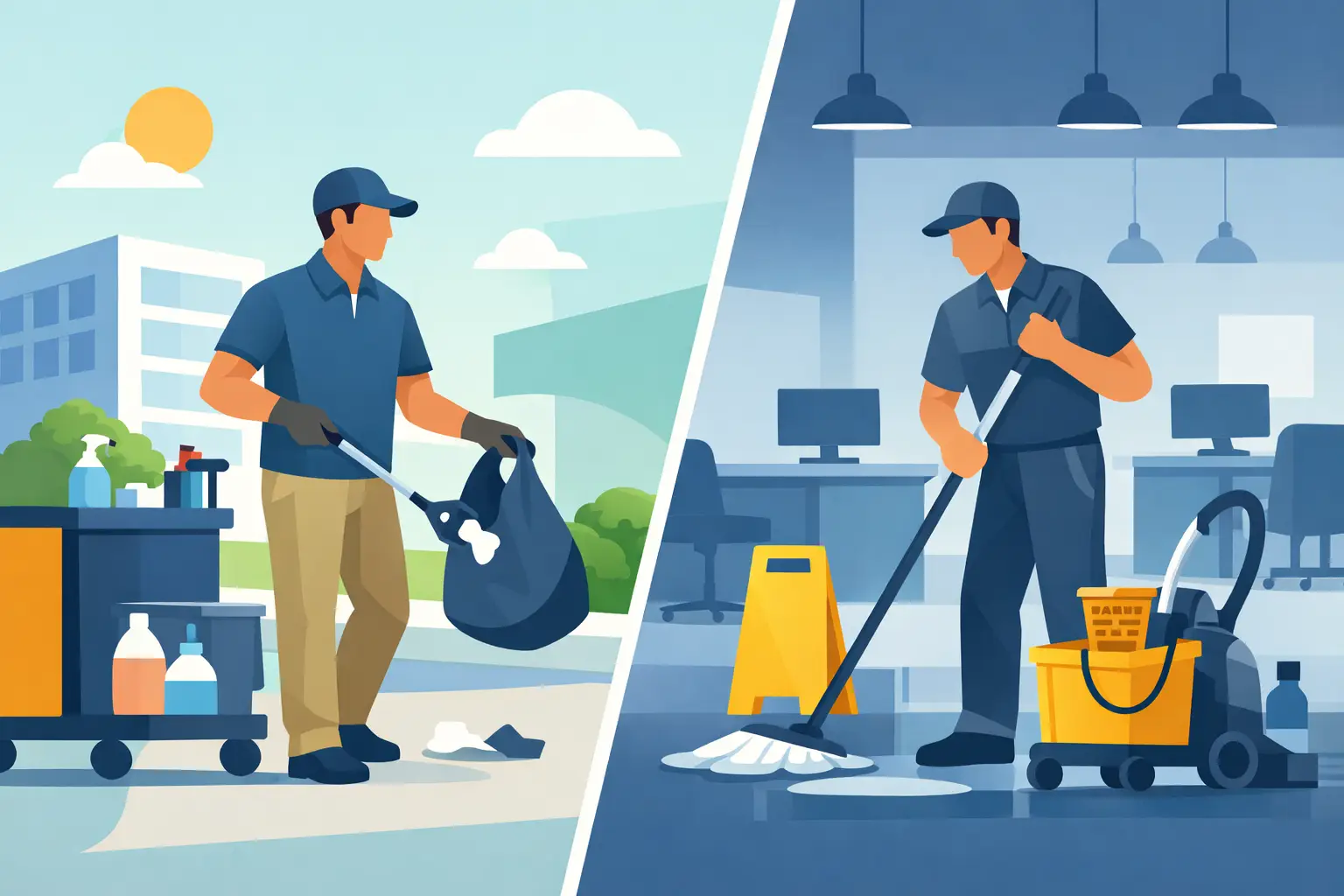
The clearest difference in day porter vs janitorial services is timing and function. Day porters work during business hours, providing active support while your facility is occupied. Janitorial teams typically perform deeper routine cleaning after hours or during low-traffic periods.
A day porter is focused on continuous upkeep. That can include monitoring restrooms, restocking consumables, managing spills, wiping touchpoints, cleaning entry glass, straightening common areas, and responding to issues as they happen. Their role is highly visible and responsive. In a busy office, medical facility, school, retail space, or multi-tenant property, this kind of presence helps maintain standards throughout the day instead of waiting until the evening cleaning cycle.
Janitorial services are usually structured around scheduled tasks. Those tasks often include vacuuming, mopping, trash removal, restroom sanitation, dusting, breakroom cleaning, and periodic floor care. This work is generally completed after employees, tenants, customers, or visitors have left the building. The goal is comprehensive cleaning with minimal interruption.
Both services support the same outcome - a cleaner, better-managed facility - but they solve different problems.
What a day porter is really there to do
A common mistake is thinking a day porter is simply a cleaner on site during business hours. In practice, the role is broader than that. A strong day porter supports the daily appearance and functionality of the building.
In high-traffic environments, conditions change fast. Restrooms may need multiple checks in a single day. Rain can create safety risks at entrances. Conference areas may need to be reset between meetings. Waste can overflow long before the evening crew arrives. A day porter helps address those issues in real time.
That responsiveness matters because occupants notice the building as they use it, not just how it looked when they arrived. If your facility hosts clients, tenants, patients, or employees throughout the day, visible upkeep can directly affect perception, comfort, and confidence in your operation.
Day porter service also helps reduce strain on your internal team. Instead of asking front desk staff, maintenance teams, or office managers to handle routine cleanliness issues, you have dedicated support built into the day.
What janitorial services are designed to handle
Janitorial service is the foundation of most commercial cleaning programs. It is built around consistency, routine, and completion of core cleaning tasks at the right intervals.
This is where the heavier daily cleaning happens. Floors are cleaned more thoroughly. Restrooms are sanitized in full. Trash is removed throughout the facility. Surfaces are dusted and disinfected. Kitchens, offices, and common areas are returned to baseline condition so the building is ready for the next day.
Because janitorial crews usually work after hours, they can move more efficiently and cover a wider scope without working around occupants. That makes janitorial service ideal for businesses that want dependable, recurring cleaning with minimal disruption.
For many facilities, janitorial service alone is enough. If your building has predictable traffic, limited public access, and no major cleanliness concerns during operating hours, an evening or overnight cleaning schedule may meet your needs well.
Which service is better for your facility
The better question is not whether day porter or janitorial service is superior. It is which service model fits your building.
If your facility has heavy daytime traffic, public-facing spaces, or standards that must be maintained continuously, day porter support becomes much more valuable. Office towers, medical offices, educational facilities, retail centers, and shared commercial properties often fall into this category. When cleanliness affects safety, brand presentation, or customer experience in real time, waiting until the end of the day can create avoidable problems.
If your space is lower traffic and primarily needs reliable routine cleaning, janitorial service may be the more practical and cost-effective choice. Professional offices with stable occupancy, light visitor volume, and straightforward cleaning needs often do well with a customized after-hours schedule.
There is also a budget consideration. Day porter service is more labor-intensive because it places personnel on site during active hours. That added support can be well worth the investment, but only if your operations benefit from it. For some properties, the smartest solution is a hybrid plan with janitorial service as the base and day porter coverage on peak days, in common areas, or during seasonal high-traffic periods.
Signs you may need a day porter instead of janitorial service alone
If you are seeing cleanliness issues show up before the workday ends, your current cleaning program may not match your occupancy pattern. Overflowing trash, restroom complaints, smudged entry glass, lobby mess, and frequent spill response are all signs that after-hours janitorial cleaning is not enough on its own.
Another sign is when your staff is filling the gap. If reception teams are wiping surfaces, managers are restocking supplies, or maintenance staff is repeatedly pulled into appearance-related tasks, your facility likely needs daytime support.
This is especially true in buildings where presentation is part of the business. Law offices, medical practices, corporate headquarters, and multi-tenant properties all benefit from spaces that stay polished during active hours, not just at opening and closing.
Why many businesses need both
In practice, many commercial facilities benefit from both services because they address separate layers of building care. Janitorial teams handle the scheduled deep routine cleaning that resets the facility. Day porters preserve that standard throughout the day.
Think of janitorial service as the structured cleaning program and day porter support as the operational maintenance layer. One restores the space. The other protects it.
This combination is often the most effective approach for facilities with extended hours, mixed-use traffic, shared amenities, or elevated cleanliness expectations. A customized plan can align staffing and task frequency with how the building is actually used, which is far more effective than applying the same schedule to every site.
That is where a tailored service model matters. A provider like Americlean Professional Services can help evaluate traffic flow, occupancy timing, and high-priority touchpoints so the cleaning plan fits your building instead of forcing your building to fit a standard package.
How to decide what your facility actually needs
Start with your building's daily pattern, not just its square footage. A smaller office with constant visitors may need more active support than a larger office with limited foot traffic. Look at when problems happen, where complaints come from, and whether those issues affect operations, safety, or presentation.
It also helps to consider how visible cleanliness is to the people who matter most in your space. In some facilities, employees may tolerate minor wear during the day. In others, clients, patients, tenants, or guests expect the environment to stay polished at all times.
Finally, think about responsiveness. If something goes wrong at 11:00 a.m., does your current service plan solve it right away or leave it there until night? That answer often makes the decision clearer.
The most effective cleaning strategy is rarely the cheapest line item or the broadest package. It is the one that supports your operations consistently, matches your building's demands, and keeps standards high without pulling attention away from your core business.
If your facility needs to look ready at all hours, not just after a nightly cleaning, the right service mix can make a noticeable difference every single day.