
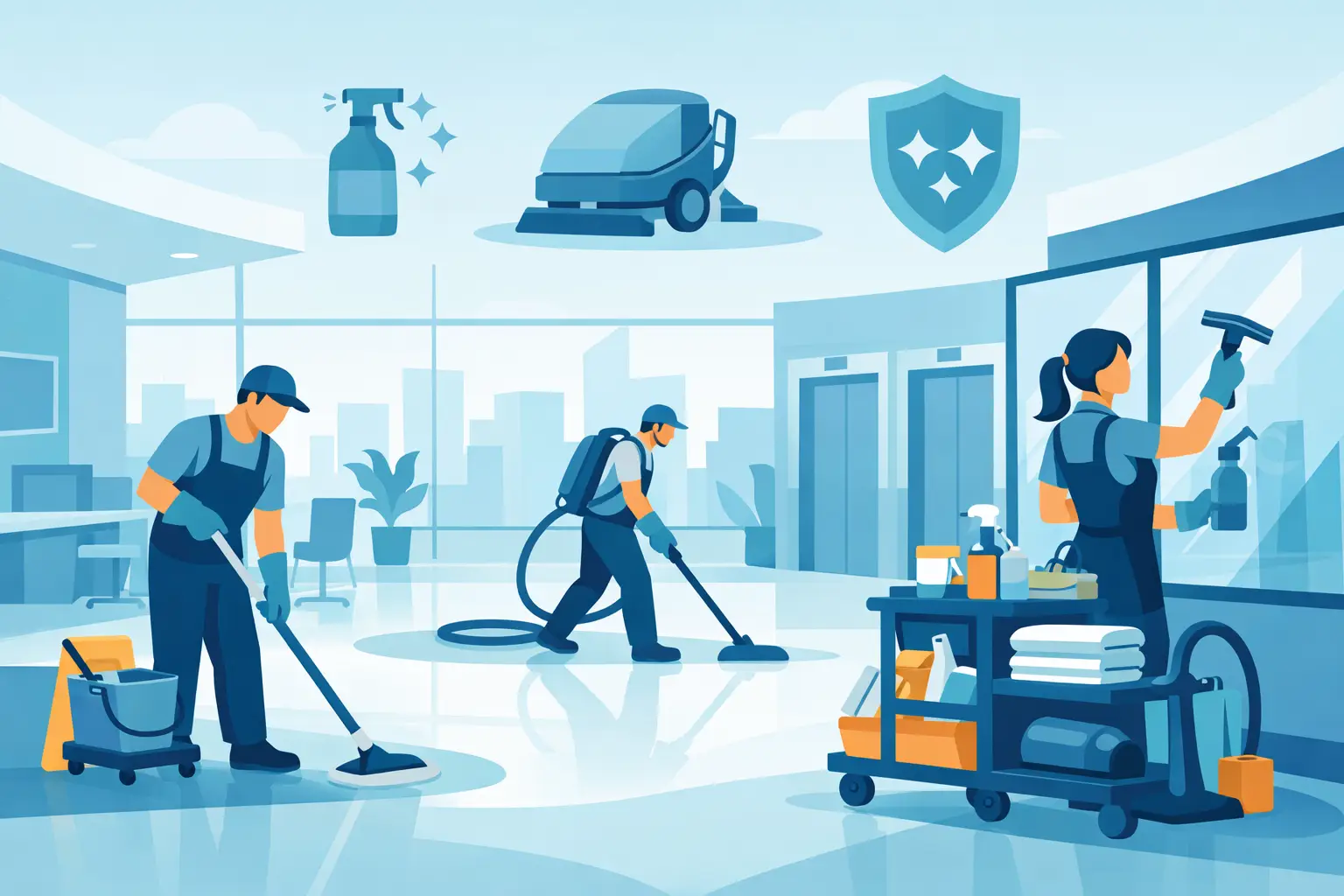
A missed trash pull in a lobby is noticeable. A poorly maintained restroom, dusty vents, or floors that never seem fully clean tell a bigger story about how a facility is being managed. That is why a strong commercial facility cleaning guide matters. For business owners, property managers, and operations teams, cleaning is not just about appearance. It affects tenant satisfaction, employee experience, safety, and day-to-day continuity.
Commercial spaces rarely have the same needs from one building to the next. A medical office has different expectations than a corporate suite. A warehouse with front-office traffic requires a different schedule than a retail environment open seven days a week. The most effective cleaning plan is not the most aggressive one. It is the one built around how the facility actually operates.
What a commercial facility cleaning guide should cover
At a practical level, a commercial cleaning plan should define scope, frequency, accountability, and timing. If any one of those areas is vague, service quality usually becomes inconsistent. Facilities often run into trouble when expectations are assumed instead of documented.
Scope answers a simple question: what exactly is being cleaned? That includes common areas, restrooms, workspaces, break rooms, touchpoints, floors, glass, and specialty surfaces. Frequency determines how often each task happens. Some items need daily attention, while others may only require weekly, monthly, or quarterly service. Accountability means there is a clear standard for what done well looks like. Timing matters because cleaning that disrupts operations creates a new problem while trying to solve another.
A reliable provider will help translate those four areas into a workable routine. That is especially important for facilities with changing occupancy, multiple shifts, or after-hours access requirements.
Start with the building, not the package
One of the most common mistakes in commercial cleaning is buying a standard package and expecting it to fit a complex facility. In reality, traffic patterns drive cleaning demand more than square footage alone. Two 20,000-square-foot buildings can require very different service levels if one has frequent visitors, shared restrooms, and daily conference use while the other has limited occupancy.
A useful assessment starts with a walk-through of the full environment. Entrances, restrooms, elevator areas, kitchens, production zones, and conference rooms usually reveal the most about service needs. Flooring also matters. Carpet, tile, polished concrete, and hard surface finishes each require different maintenance methods and different intervals.
The right question is not, how many times per week should the building be cleaned? The better question is, which parts of the building require daily consistency, and which areas can be maintained on a less frequent cycle without lowering standards?
The core areas every facility manager should evaluate
Restrooms tend to shape perception faster than any other area. If fixtures are not sanitized, dispensers are empty, or odors linger, occupants notice immediately. Restroom cleaning should address sanitation, supply checks, odor control, touchpoint disinfection, and floor care with enough frequency to match usage.
Entrances and lobbies carry a different kind of pressure. These spaces create the first impression for clients, visitors, and employees. Dirt tracked in from weather, fingerprints on glass, and worn-looking floors can make an otherwise well-run property seem neglected. In Chicagoland, seasonal conditions make entryway maintenance especially important because snow, salt, rain, and debris put constant pressure on floors and mats.
Workspaces and shared office areas require balance. Teams need clean surfaces, emptied waste, and orderly common areas, but they also need service that does not interfere with productivity. That often means after-hours or low-traffic scheduling, along with clear protocols around desks, electronics, and personal items.
Break rooms and kitchens are small spaces that generate outsized problems if neglected. Crumbs, spills, grease buildup, and overflowing trash quickly affect cleanliness and morale. These areas need routine wiping, trash removal, and floor attention, but they also benefit from periodic deeper cleaning to prevent buildup.
Building a schedule that supports operations
A cleaning schedule should follow building use, not convenience alone. Nightly janitorial service may be the right fit for one facility and unnecessary for another. In some environments, a daytime porter is more valuable than additional evening service because the facility needs active support during business hours.
This is where customization matters. High-traffic buildings often need a layered approach with daily core cleaning, weekly detail work, and monthly or quarterly maintenance for floors, carpets, and hard-to-reach areas. Lower-traffic spaces may need fewer visits but more focused service windows.
There is also a trade-off between frequency and intensity. If a building receives light service too infrequently, visible issues build up and take longer to correct. If it receives too much service in low-use areas, the client pays for labor that does not add meaningful value. The goal is not maximum cleaning. It is the right level of cleaning, delivered consistently.
Why consistency matters more than occasional deep effort
Many facilities can tolerate a minor issue once. What they cannot tolerate is unpredictability. Inconsistent cleaning creates extra work for office managers, maintenance teams, and property staff who end up checking, correcting, or escalating basic service failures.
Consistency comes from systems, not promises. That includes documented task lists, site-specific instructions, quality checks, communication protocols, and reliable staffing coverage. If a provider cannot maintain service when schedules change, holidays approach, or special requests come up, the account becomes reactive very quickly.
For businesses with multiple tenants, customer-facing spaces, or regulated environments, inconsistency can create more than frustration. It can affect brand perception, occupant confidence, and internal compliance expectations.
A commercial facility cleaning guide for high-traffic properties
High-traffic properties need tighter planning because dirt, wear, and supply usage accelerate faster than many teams expect. In these environments, restrooms, entry points, and shared spaces should be reviewed first when setting service frequency. Waiting until the whole building looks unclean usually means the schedule is already behind the facility's actual needs.
It also helps to separate routine janitorial work from periodic maintenance. Daily vacuuming does not replace carpet extraction. Regular mopping does not replace floor refinishing. Glass cleaning in common areas does not solve neglected interior partitions or hard-to-reach windows. A complete plan should account for both everyday presentation and long-term surface care.
That distinction matters financially as well. Preventive maintenance usually costs less than trying to restore surfaces after extended neglect. Floors, fixtures, and finishes last longer when routine care and periodic specialty service work together.
Choosing a cleaning partner, not just a vendor
A low bid can look efficient on paper, but cleaning contracts often fail on execution. When a provider is understaffed, unclear on scope, or hard to reach after hours, the hidden cost shows up in complaints, follow-up, and service gaps.
A dependable commercial cleaning partner should be able to explain how they staff accounts, how they handle quality control, and how they adapt service plans when a facility changes. Responsiveness matters as much as routine performance. If your building has an event, weather issue, tenant move, or unexpected need, you should know who to call and what kind of support to expect.
For many organizations, especially those operating outside standard office hours, availability is not optional. It is part of risk management. Americlean Professional Services is built around that need, with customized plans and around-the-clock dependability designed for commercial facilities that cannot afford service interruptions.
When to adjust your current cleaning plan
If occupants are noticing recurring issues, the answer is not always more cleaning. Sometimes the issue is poor task alignment, weak supervision, or a schedule that no longer fits the building. A facility that has added staff, extended hours, or changed tenant mix may outgrow its original service plan without realizing it.
It is worth reviewing your current arrangement if complaints are increasing, supply shortages are common, floor conditions are declining, or your team spends too much time managing the cleaner instead of managing the building. Those are signs that the service model may be wrong even if the contract is still active.
A useful cleaning plan should feel steady, not fragile. It should support operations quietly in the background, without constant intervention from your staff.
Clean facilities do more than look professional. They reduce friction. When your cleaning program is built around the way your property actually runs, the result is a building that feels better managed every day.